Home Maintenance
Preventing Water Damage: A Sacramento Homeowner's Checklist
Water damage is the second most common homeowners insurance claim in California, and the average cost of a single incident tops $11,000. In Sacramento — where summer heat dries out soil, winter rains saturate the ground, and aging plumbing runs through decades-old homes — the risk is real for almost every homeowner.
The good news: most water damage is preventable. A few hours of inspection and maintenance each year can save you thousands of dollars and the disruption of a major repair. At The Water Works, we've responded to hundreds of water damage emergencies across Folsom, Roseville, Elk Grove, and the greater Sacramento area. Here's the checklist we wish every homeowner followed.
Know Where Your Water Shutoff Valve Is
This is step zero. If a pipe bursts at 2 a.m., you need to shut off the water in seconds, not after a 20-minute search. Your main shutoff valve is usually located where the water line enters your home — in a garage, basement, crawl space, or near the water meter. If you don't know where yours is, find it now. We wrote a quick guide to finding your main water shutoff valve that walks you through it in 60 seconds.
Test the valve once a year — older gate valves can seize from disuse. If it won't turn, have it replaced before you need it.
Inspect Your Water Heater Annually
Your water heater is one of the most common sources of catastrophic water damage in a home. A tank that ruptures can release 40–50 gallons of water in minutes. Here's what to check:
- Age: Most tank water heaters last 8–12 years. If yours is over 10, it's living on borrowed time. Check the manufacture date on the serial number label.
- Signs of trouble: Rust on the tank exterior, water pooling beneath the unit, rumbling or popping sounds (sediment buildup), or discolored hot water are all warning signs. See our guide to water heater warning signs for a full breakdown.
- The drain pan: If your water heater sits in a pan, make sure the pan is dry and the drain line is clear. If it's not in a pan, consider having one installed — it can catch a slow leak before it becomes a flood.
- The T&P valve: The temperature and pressure relief valve should be tested annually. Place a bucket under the discharge pipe, lift the valve lever, and let water flow for a few seconds. If it doesn't release water, or if it leaks continuously after testing, it needs replacement.
If your water heater is aging or showing warning signs, schedule water heater repair or replacement before it fails.
Check Supply Lines and Hoses
The braided supply lines connecting your washing machine, dishwasher, refrigerator ice maker, and toilets are common failure points. A burst washing machine hose can release hundreds of gallons of water per hour.
- Replace rubber hoses with braided stainless steel lines. Rubber hoses degrade and crack; stainless braided lines are far more durable.
- Replace washing machine hoses every 5 years, regardless of condition.
- Check connections for corrosion and moisture at every fixture. A small drip at a supply line connection is a warning — not an inconvenience.
Inspect Under Sinks and Behind Toilets
These are the most common places for slow leaks — and the least-checked areas in most homes. Once a month, open the cabinet doors under your kitchen and bathroom sinks and look for:
- Water stains on the cabinet floor
- Warped or swollen wood
- A musty smell (mold)
- Green or white mineral deposits on pipes and fittings
- Dampness at connection points
Behind toilets, check the floor around the base. If the flooring is soft, discolored, or the toilet wobbles, the wax ring may be leaking — a toilet repair should be scheduled before the subfloor is damaged.
Monitor Your Water Bill
Your water bill is one of the best leak-detection tools you have. If your usage spikes without a change in habits (no new lawn, no guests, no pool fill), you likely have a hidden leak. A toilet running silently can waste 200 gallons a day. A pinhole leak in a supply line behind a wall can waste 10–50 gallons a day and cause structural damage you won't see until it's extensive.
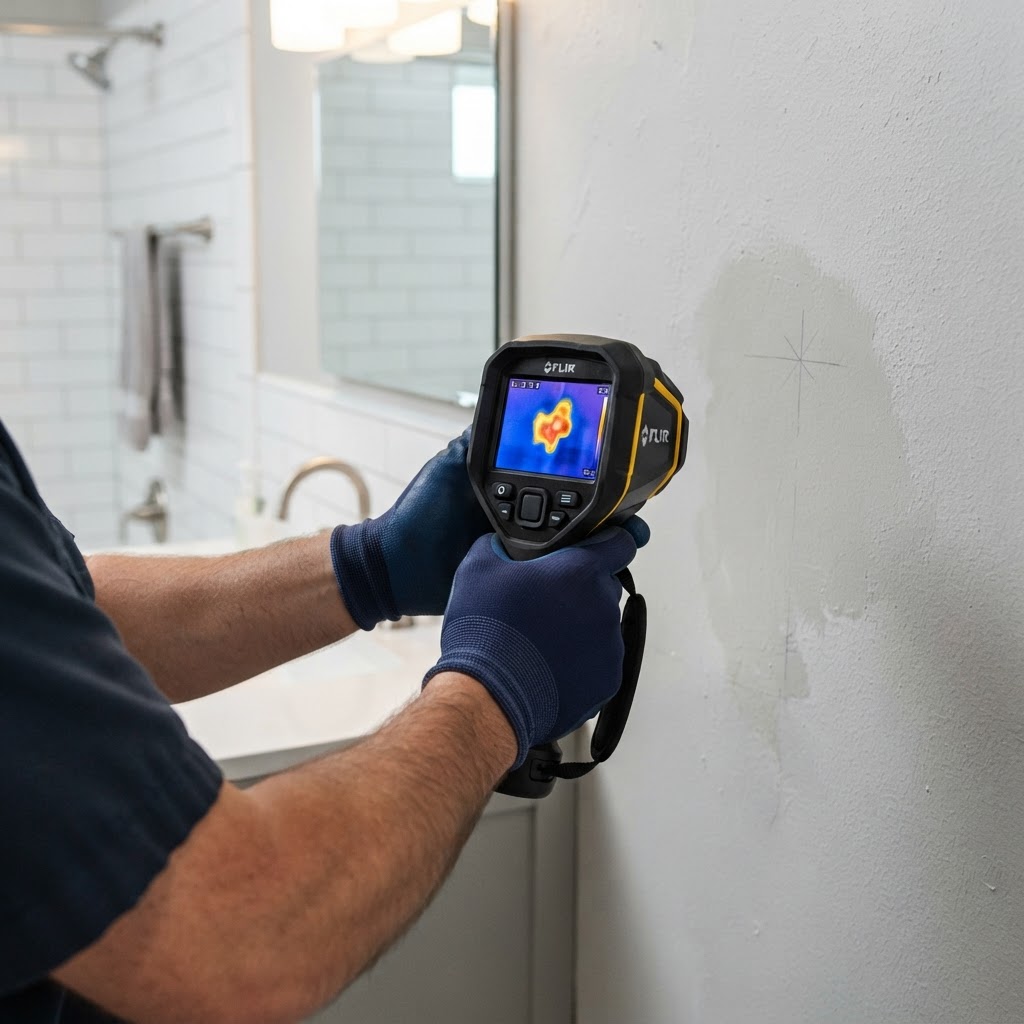
If your bill is climbing and you can't explain it, call for professional leak detection. Thermal imaging and acoustic listening equipment can pinpoint a leak inside a wall or under a slab without tearing into your home.
Check Your Water Pressure
High water pressure (above 80 PSI) stresses every pipe, joint, and appliance in your home. It's a leading cause of premature supply line failure, leaking faucets, and reduced water heater lifespan. Buy a pressure gauge (about $10 at any hardware store), attach it to an outdoor spigot, and test with all other fixtures off. If your reading is above 80 PSI, you need a pressure regulator — or a new one if yours is failing.
Low pressure in one area can indicate a clog or a leak in that section of pipe. Low pressure throughout the house may indicate a supply line problem or a failing pressure regulator.
Clean Gutters and Downspouts
This isn't plumbing, but it's water damage prevention. Clogged gutters overflow, sending water down your home's exterior walls and into the foundation. In Sacramento's rainy season (November through March), clogged gutters are a leading cause of water intrusion into crawl spaces and basements. Clean your gutters twice a year — once in fall after the leaves drop, once in spring.
Maintain Your Drains
Slow drains aren't just annoying — they're a sign of developing blockages that can lead to backups and overflows. A few habits prevent most drain problems:
- Use drain strainers in kitchen and bathroom sinks
- Never pour grease down the kitchen drain
- Don't flush anything but toilet paper and human waste
- Run hot water for 30 seconds after each use to help clear minor buildup
- Schedule annual professional drain cleaning if your home is older or you've had recurring clogs
If you have multiple slow drains, hear gurgling, or notice sewage odors, you may have a sewer line issue that requires camera inspection.
Know the Signs of a Slab Leak
Slab leaks — leaks in pipes embedded in or under a concrete slab foundation — are a particular risk in Sacramento's older neighborhoods. The clay soil here expands and contracts with moisture changes, stressing foundation and the plumbing within it. Watch for:
- Warm spots on the floor (a hot water line leak under the slab)
- Cracks in walls or flooring that appear suddenly
- The sound of running water when nothing is on
- Unusually lush patches of grass in your yard (water seeping from an underground leak)
- A spike in your water bill
Slab leaks require professional leak detection and specialized repair. Don't ignore the signs — the longer a slab leak runs, the more damage it does to your foundation.
Schedule an Annual Plumbing Inspection
The single best thing you can do to prevent water damage is to have your plumbing system inspected annually by a licensed plumber. A professional inspection catches the problems you can't see — corrosion inside pipes, a failing water heater, a wax ring starting to leak, a pressure regulator that's drifting out of range — before they become emergencies.
At The Water Works, we serve the entire Greater Sacramento area with comprehensive plumbing services — leak detection, drain cleaning, water heater repair, pipe repair, and 24/7 emergency plumbing. Call (916) 290-4500 or request a service call to schedule your annual inspection — it's the cheapest insurance you'll ever buy.
- Sump pumps protect basements and low areas from flooding
- Backwater valves prevent sewage from backing up into your home
- Gutter downspout extensions direct water away from the foundation
- Yard grading should slope away from the house
- Smart water leak sensors alert you before damage spreads
- Septic maintenance — pump every 3-5 years
- Water heater flush — annual, removes sediment buildup
- Clean faucet aerators — every 6 months, restores pressure
- Inspect washing machine hoses — replace every 5 years
- Test main shutoff valve — ensure it turns freely
- New system installation in Sacramento starts at $500
- Premium systems with Wi-Fi alerts run $800-$1,200
- Installation takes 2-4 hours
- Can prevent $10,000+ in water damage
Need a licensed plumber?
The Water Works serves homes and businesses across California with 24/7 emergency service and upfront pricing.