Water Heaters
Tank vs Tankless Water Heater in Sacramento: A Plumber's Guide
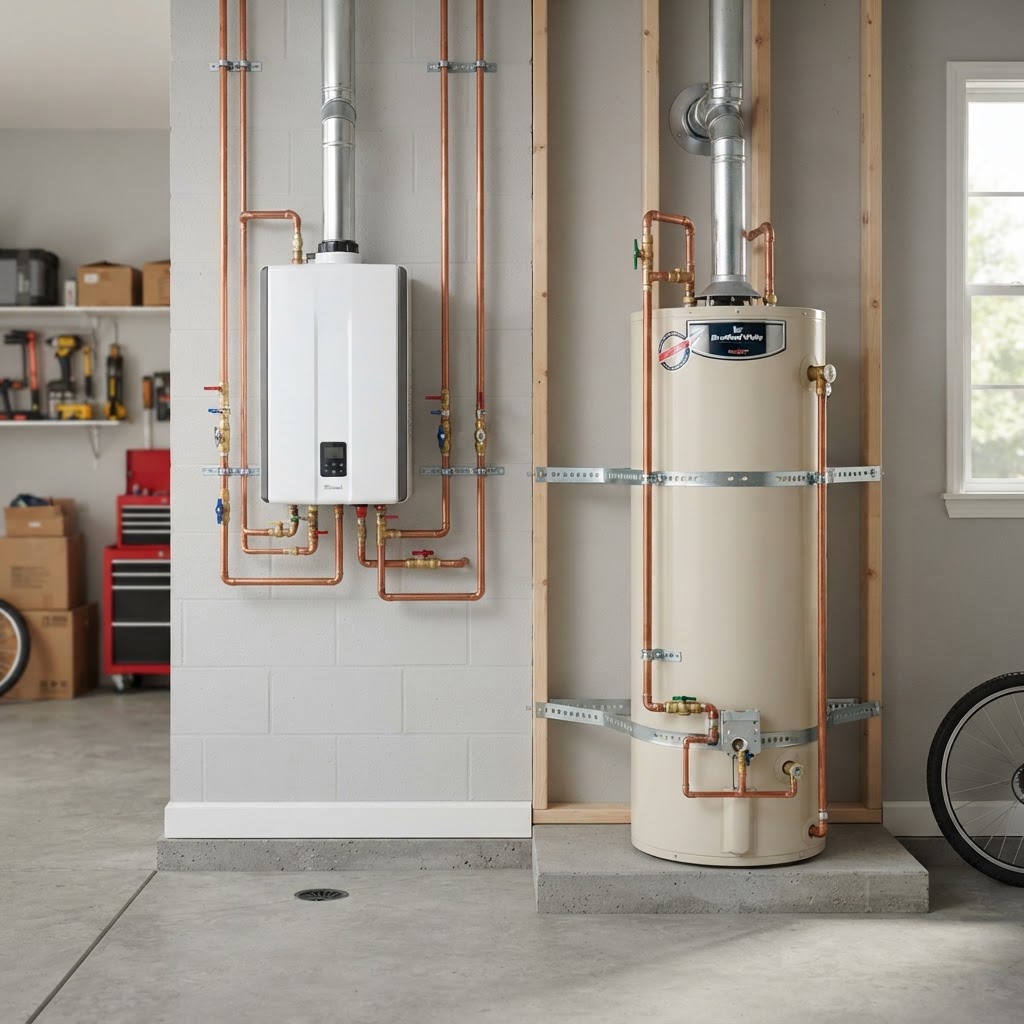
Choosing a tank vs tankless water heater in Sacramento comes down to your household's hot water demand, budget, and available space. Tank heaters offer lower upfront costs and simpler installation. Tankless units provide endless hot water and save space but require higher initial investment and strict hard-water maintenance.
Key takeaways
- Tank heaters cost less upfront but last 8-12 years; tankless units cost more but last 15-20 years.
- Sacramento's hard water requires annual flushing for tanks and strict descaling for tankless systems.
- Both types require a city permit, seismic strapping (for tanks), and proper venting to meet California code.
Which costs more to install and run?
The upfront cost of replacing a water heater varies significantly based on the technology you choose. Standard tank heaters are the most affordable to install because they usually connect to your existing plumbing and gas lines without major modifications. Tankless water heaters cost more initially because they require specialized labor and infrastructure changes. You will often need to upgrade your gas line from 1/2-inch to 3/4-inch to handle the higher BTU demand.
While tankless units cost more on day one, they only heat water when you open a faucet. This on-demand heating eliminates standby energy loss, reducing your monthly gas bill over time. Standard tanks keep 40 to 50 gallons of water hot 24/7, which wastes energy but provides a highly reliable reservoir for immediate use.
| Feature | Standard Tank | Tankless (On-Demand) |
|---|---|---|
| Upfront Cost | $1,500 - $2,200 | $3,000 - $4,500 |
| Lifespan | 8 - 12 years | 15 - 20 years |
| Hot Water Supply | Limited (40-50 gallons) | Endless |
| Space Required | Large (garage or closet) | Compact (wall-mounted) |
| Maintenance | Annual flush | Annual chemical descale |
How does Sacramento hard water affect water heaters?
Greater Sacramento and surrounding Northern California counties have notoriously hard water. Calcium and magnesium dissolved in the municipal water supply wreak havoc on heating elements and internal components. In a standard tank, these minerals settle at the bottom as sediment as the water heats up. When this sediment builds up, it traps water against the burner, causing popping noises and eventual tank failure.
Tankless units are even more sensitive to scale buildup. Because they flash-heat water in narrow copper or stainless steel heat exchangers, scale restricts water flow and causes the unit to overheat rapidly. If you ignore maintenance, the heat exchanger will crack and leak. We strongly recommend an annual descaling service for tankless units to protect your investment.
If you notice water pooling around the base of your existing tank, it often indicates a breached inner lining caused by corrosion. In these cases, advanced leak detection isn't necessary—the tank is compromised and must be replaced. Catching these signs early prevents catastrophic garage floods and expensive water damage.
What are the local code and permit requirements?
California plumbing code dictates strict safety standards for all water heater installations. You cannot simply swap a unit without pulling a permit and passing a city inspection. For standard tanks, state law requires seismic strapping on the top and bottom thirds of the tank to prevent it from tipping and severing gas lines during an earthquake.
Additionally, closed-loop plumbing systems require a thermal expansion tank. When water heats up, it expands, and without an expansion tank, this pressure stresses your pipes and fixtures, leading to premature leaks. Tankless installations require specific Category III stainless steel or PVC venting materials to safely exhaust combustion gases. If you have questions about compliance, check our FAQ for details on local permit processes.
How to choose the right system for your home
Deciding between a tank and tankless system requires looking closely at your daily routine and home infrastructure. Follow these steps to evaluate your specific needs:
- Count your fixtures: Determine how many showers, sinks, and appliances might run simultaneously during peak morning hours.
- Check your gas line: Verify if your current gas meter and piping can support a 199,000 BTU tankless unit.
- Evaluate your space: Decide if you need to reclaim garage space by moving to a compact, wall-mounted unit.
- Assess your budget: Weigh the higher upfront cost of tankless against the long-term energy savings and extended lifespan.
Consider a real scenario: A family of five in Roseville constantly runs out of hot water during morning showers. A tankless system solves their high-demand problem perfectly, providing endless hot water for back-to-back showers. Conversely, a homeowner in an older East Sacramento house with a small gas meter might find upgrading the gas infrastructure too expensive. For them, a high-efficiency 50-gallon tank is the most practical and cost-effective choice.
Choosing the right water heater means balancing your budget, space, and hot water needs. Whether you opt for the reliability of a standard tank or the endless supply of a tankless system, professional water heater repair and installation ensures safety and code compliance.
Frequently Asked Questions
Do I need a permit to replace my water heater in Sacramento?
Yes. Sacramento requires a permit for all water heater replacements to ensure the installation meets safety codes. This includes verifying proper venting, gas line sizing, and mandatory seismic strapping for tank units.
Can I switch from a gas tank to an electric tankless heater?
While possible, electric tankless heaters require massive amounts of electricity to flash-heat water. Most Sacramento homes would need a costly electrical panel upgrade to support the 100 to 120 amps required for a whole-home electric tankless unit.
How often should I flush my water heater?
You should flush a standard tank water heater once a year to remove sediment buildup. Tankless water heaters require an annual chemical descaling flush, especially given the hard water conditions prevalent in Northern California.
Need a Sacramento plumber?
Talk through the repair with a licensed tech. Free estimates, 24/7 emergency service across Greater Sacramento.