Leaks & Pipes
Signs of a Slab Leak: How to Spot Underground Pipe Damage
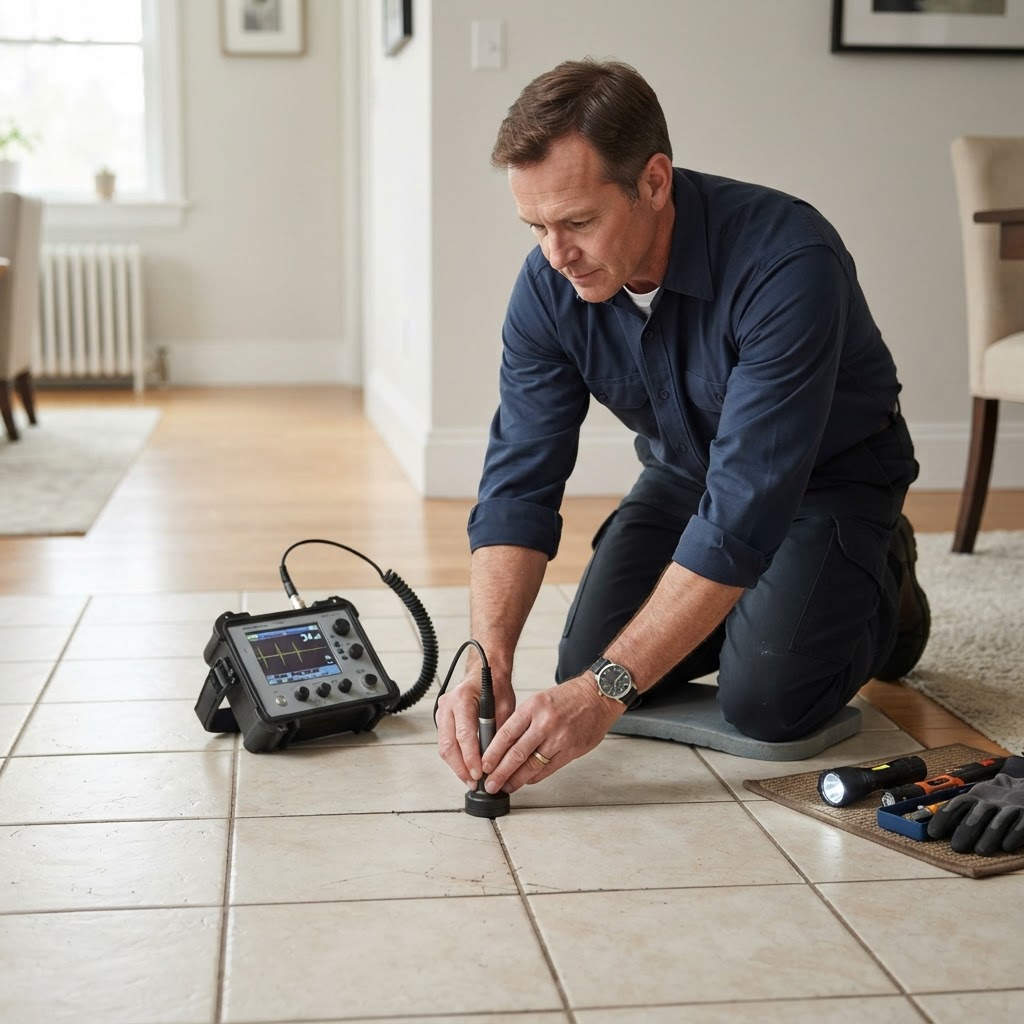
A slab leak is a broken water line running under your home's concrete foundation. The most obvious signs of a slab leak are an unexplained spike in your water bill, warm spots on your flooring, and a water meter that spins when all fixtures are off. If you notice these symptoms, shut off your main water valve immediately to prevent severe foundation damage.
Key takeaways
- A spinning water meter with all fixtures off is the most reliable DIY test for a hidden leak.
- Warm spots on tile or laminate flooring usually indicate a hot water line break under the slab.
- Non-invasive electronic leak detection can pinpoint the exact location without breaking your floors.
How to Test Your Water Meter for a Slab Leak
The easiest way to confirm a hidden plumbing issue is by checking your water meter. This simple test takes about 15 minutes and costs nothing.
- Shut off all water inside and outside your home. Do not run the washing machine, dishwasher, or irrigation system.
- Locate your water meter, which is usually near the street or sidewalk in a concrete box.
- Check the leak indicator, often a small red or black triangle on the meter face.
- Watch for movement. If the dial is spinning while the water is off, you have a continuous leak.
If the meter spins, you need professional leak detection to find the exact source. Do not start tearing up floors based on a guess.
Physical Signs of a Slab Leak Inside Your Home
Not all leaks are massive blowouts. Many start as tiny pinhole leaks in aging copper pipes. Pay close attention to these physical indicators.
Warm spots on the floor are a classic symptom. If your cat suddenly loves sleeping on a specific patch of tile in your kitchen, you likely have a hot water line leaking into the concrete. We see this frequently in older homes across Sacramento and Placer counties.
The sound of running water when nothing is turned on is another major red flag. It often sounds like a faint hiss or whoosh coming from the walls or floor.
Damp carpets or warped hard flooring mean water is wicking up through the concrete. If you see bubbling linoleum or dark spots on hardwood, the water has already breached the slab and is damaging your home.
Why Do Slab Leaks Happen in Northern California?
Sacramento and Yolo counties are known for expansive clay soils. When this soil gets wet during winter storms and dries out in the summer heat, it shifts dramatically. This constant movement puts immense stress on the plumbing buried beneath your foundation.
Hard water is another major culprit in our region. The mineral-heavy water slowly corrodes copper pipes from the inside out. Over decades, this creates weak points and pinhole leaks. If your home was built in the 1970s or 1980s with original copper plumbing, you are at a high risk for these failures.
We recently helped a homeowner in El Dorado Hills who noticed their water heater running constantly. They assumed the heater was broken. After a quick inspection, we found the real issue: a massive hot water slab leak draining directly into the soil.
Slab Leak vs. In-Wall Leak
Homeowners often confuse slab leaks with in-wall leaks. Both cause significant water damage, but they require entirely different diagnostic approaches.
| Feature | Slab Leak | In-Wall Leak |
|---|---|---|
| Location | Under the concrete foundation | Behind drywall or inside cabinets |
| Common Signs | Warm floors, foundation cracks | Peeling paint, moldy drywall |
| Detection Method | Acoustic listening, thermal imaging | Moisture meters, visual inspection |
| Repair Approach | Rerouting pipes or breaking slab | Opening drywall, patching pipe |
Repair Options and Typical Costs
Once we locate the leak, you have a few options. We rarely recommend jackhammering the floor unless absolutely necessary.
Pipe rerouting is usually the smartest choice. We cap the leaking line under the slab and run a new PEX line through the walls or attic. This avoids destroying your expensive flooring and bypasses the damaged underground section entirely.
Direct slab repair involves breaking the concrete to fix the specific section of pipe. This makes sense if the leak is easily accessible, like in an unfinished garage or utility room.
Note: These are typical ranges for the Greater Sacramento area. Your exact cost depends on pipe accessibility, home size, and current material prices.
If your home has failing copper lines, a spot repair is just a temporary band-aid. You will likely need comprehensive pipe repair or a whole-home repipe to prevent the next leak from destroying your property.
Ignoring the signs of a slab leak will only lead to severe structural damage, mold growth, and inflated utility bills. If your water bill is spiking or your floors feel unusually warm, test your meter immediately. Call a licensed plumber to diagnose the issue before it compromises your foundation.
Does homeowners insurance cover slab leaks?
Most policies cover the resulting water damage to your home, such as ruined flooring or drywall. However, they rarely cover the cost of the plumbing repair itself or the pipe replacement. Always check your specific policy details with your agent.
How long does it take to fix a slab leak?
A standard pipe reroute usually takes one to two days. Direct slab repairs can take longer due to concrete removal and curing times. We prioritize getting your water turned back on as quickly as possible.
Can a slab leak cause foundation damage?
Yes. Constant water flow washes away the soil supporting your foundation. This leads to cracking, settling, and severe structural issues if left untreated. Early detection is critical to saving your foundation.
Need a Sacramento plumber?
Talk through the repair with a licensed tech. Free estimates, 24/7 emergency service across Greater Sacramento.