Leaks & Pipes
Signs of a Failing Water Pressure Regulator & How to Test It
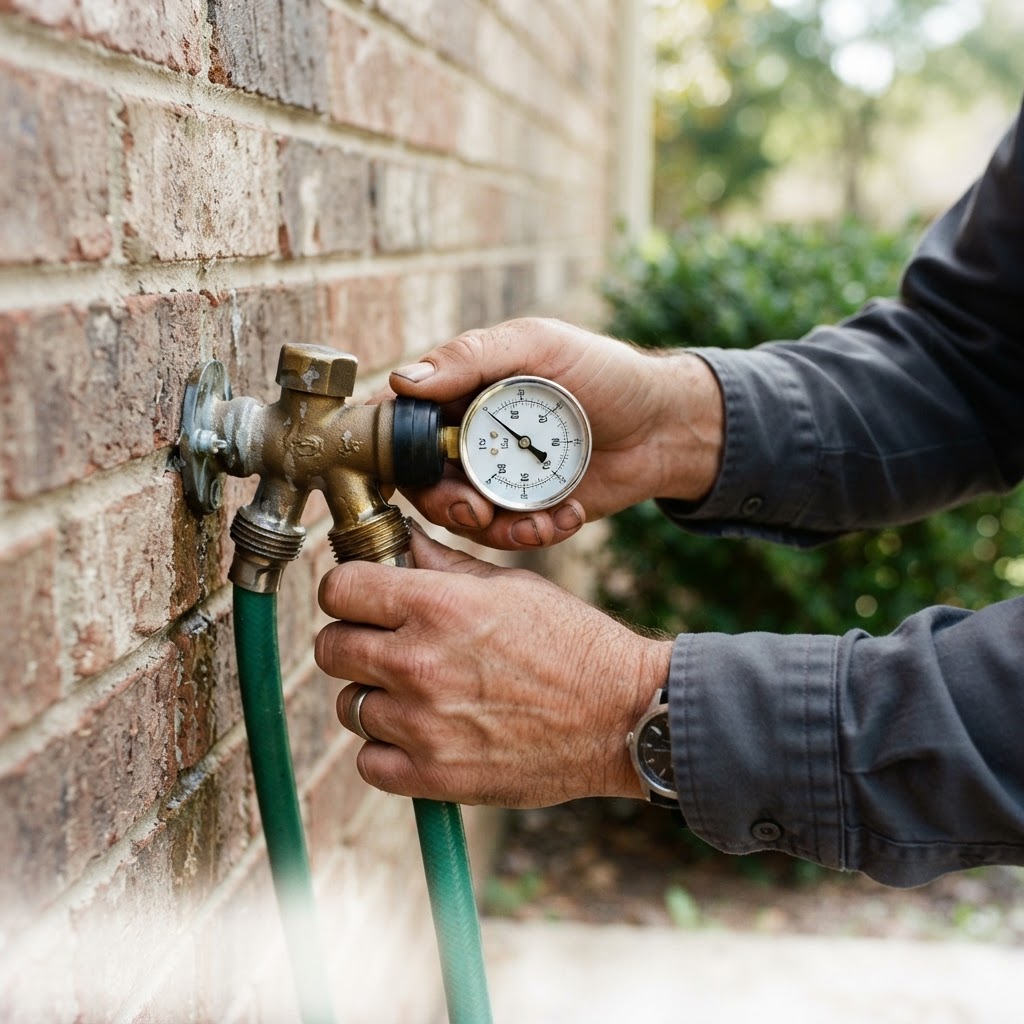
A failing water pressure regulator lets incoming city water spike above safe levels, risking burst pipes and ruined appliances. If your faucets spit, pipes bang, or your water heater leaks, your regulator is likely dead. Normal home water pressure should sit between 40 and 60 PSI.
Key takeaways
- Banging pipes, spitting faucets, and leaking water heaters indicate regulator failure.
- Test your pressure using a simple gauge attached to an outdoor hose bib.
- Regulators typically last 10 to 15 years before requiring professional replacement.
What Are the Signs of a Failing Water Pressure Regulator?
When a pressure reducing valve (PRV) fails, it usually fails open. This allows the full force of the municipal water supply into your home. You will notice water hammering, which sounds like loud banging behind your walls when valves close. Faucets may spit or spray aggressively when turned on.
Another major red flag is a leaking temperature and pressure (T&P) relief valve on your water heater. When pressure exceeds 150 PSI, this safety valve opens to prevent the tank from rupturing. If you ignore these symptoms, the constant stress will eventually cause weak joints to fail, requiring extensive pipe repair.
In older East Sacramento homes with aging galvanized pipes, a sudden pressure spike from a failed regulator often causes immediate pinhole leaks. Modern PEX and copper can handle more stress, but your washing machine hoses and dishwasher seals will still blow out under sustained high pressure.
How to Test Your Water Pressure Regulator
You do not need special training to check your home's water pressure. You only need a standard water pressure gauge with a female hose thread adapter, which costs about $15 at any local hardware store.
- Locate an unregulated hose bib. Find an outdoor spigot or the cold water connection behind your washing machine.
- Attach the pressure gauge. Thread it onto the faucet tightly by hand to ensure the rubber gasket seals.
- Turn off all water inside. Make sure no toilets are running and no appliances are using water.
- Open the valve completely. Turn the spigot on all the way and read the dial on the gauge.
- Monitor for spikes. Leave it attached for a few hours if possible. A failing regulator often allows pressure to creep up slowly over time.
If the gauge reads above 80 PSI, your regulator has failed. Plumbing codes mandate that residential water pressure must not exceed this limit.
Repair vs. Water Pressure Regulator Replacement Cost
Homeowners often ask if a PRV can be repaired. While some commercial valves can be rebuilt, residential regulators are sealed units that must be replaced entirely. Attempting to clean a heavily corroded 15-year-old regulator is a waste of labor.
| Symptom | Likely Cause | Recommended Action |
|---|---|---|
| Pressure above 80 PSI | Failed internal PRV spring | Replace regulator |
| Fluctuating pressure | Debris in regulator screen | Replace regulator |
| Leaking from PRV bell | Worn rubber diaphragm | Replace regulator |
Replacement costs vary based on the size of your main water line and accessibility. A standard residential replacement is straightforward, but digging up a buried valve adds labor time.
Ignoring a bad regulator costs far more than replacing it. A blown washing machine hose or a ruptured water heater tank will easily cause thousands of dollars in water damage, leading to a frantic call for emergency plumbing.
Sacramento Code and Installation Requirements
In Greater Sacramento and surrounding Northern California counties (Sacramento, Placer, Yolo, El Dorado, Sutter, Yuba, Solano), municipal water pressure can fluctuate wildly. Some neighborhoods see street pressures exceeding 120 PSI at night when demand drops. Local plumbing codes require a PRV on any home where the incoming pressure is 80 PSI or higher.
Installing a new regulator creates a "closed plumbing system." Because water cannot push backward into the city main when it expands, thermal expansion from your water heater will cause pressure spikes inside the house. To solve this, code requires a thermal expansion tank to be installed alongside the new regulator.
If your water heater is leaking from the relief valve after a PRV installation, the expansion tank is likely missing or under-pressurized. This is a common issue we see during water heater repair calls. Always hire a licensed plumber to ensure the regulator is sized correctly and the expansion tank is properly calibrated to match the new incoming pressure.
Protect your home by checking your water pressure annually. If your gauge reads high, replace the regulator before the pressure destroys your plumbing fixtures.
Frequently Asked Questions
How long does a water pressure regulator last?
A standard residential water pressure regulator typically lasts 10 to 15 years. Hard water, high mineral content, and extreme municipal pressure fluctuations can shorten this lifespan significantly by degrading the internal rubber diaphragm and spring.
Where is my water pressure regulator located?
The regulator is usually installed on the main water line just after the main shut-off valve. Look for a brass, bell-shaped device near your water meter, in your garage, or where the main pipe enters your home's foundation.
Can I adjust my water pressure regulator myself?
Yes, by loosening the locknut and turning the adjustment screw on top of the bell. Turn it clockwise to increase pressure and counterclockwise to decrease it. Always use a pressure gauge while adjusting to ensure you stay between 40 and 60 PSI.
Need a Sacramento plumber?
Talk through the repair with a licensed tech. Free estimates, 24/7 emergency service across Greater Sacramento.